
<span data-buffer="“>GIANT (1956) – AFI Catalog Spotlight
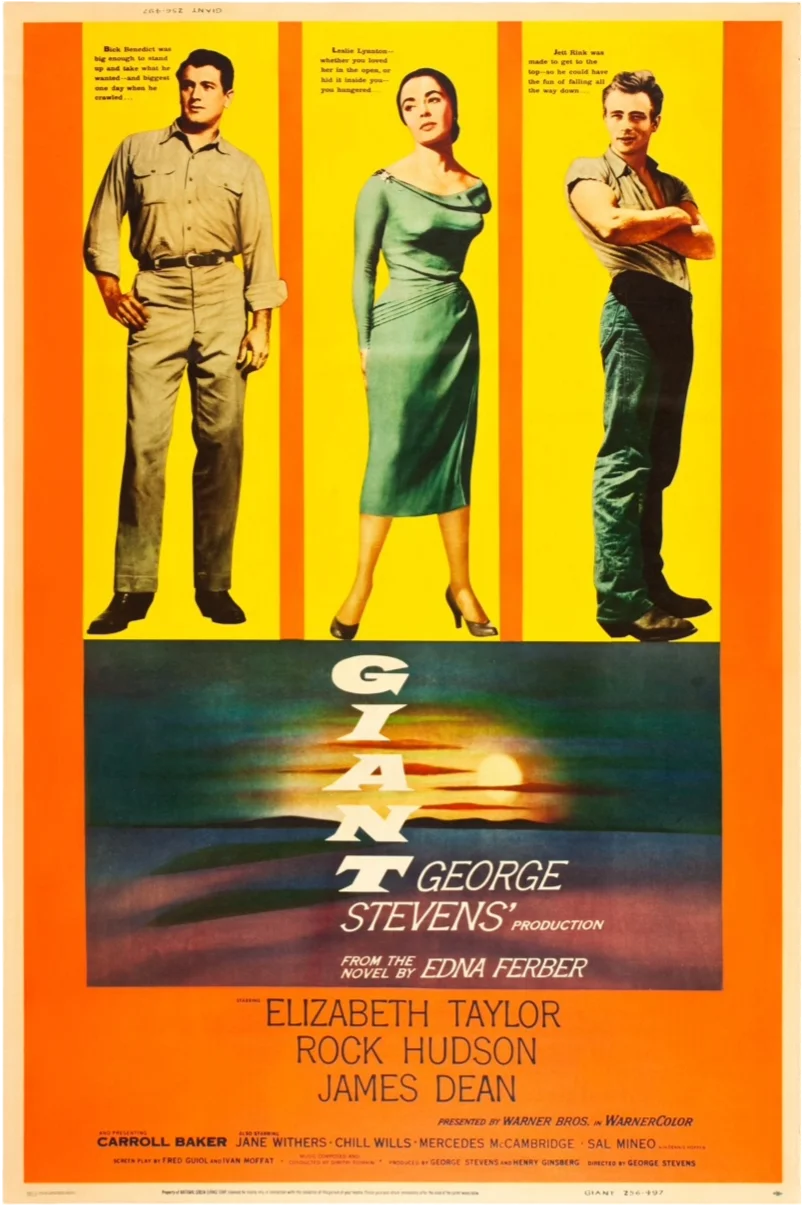
Released 70 years ago this month, director George Stevens’ epic GIANT (1956) casts an enduring shadow worthy of its name. A box office juggernaut that earned 10 Academy Award® nominations – including Best Picture, and a win for Stevens as director. In 1998, AFI named the film among the greatest American films of all time, which also marked the final film for star James Dean before his tragic and untimely death. GIANT’s place in the pantheon of Hollywood history is secure, but another aspect of its legacy is something audiences may not have noticed at the time – and, indeed, that many movie-lovers might not even know today. Hidden among the credits is the name of a young production assistant earning his first onscreen credit, but whose stature would grow to loom as large over Hollywood’s history – and its future – as the film itself.
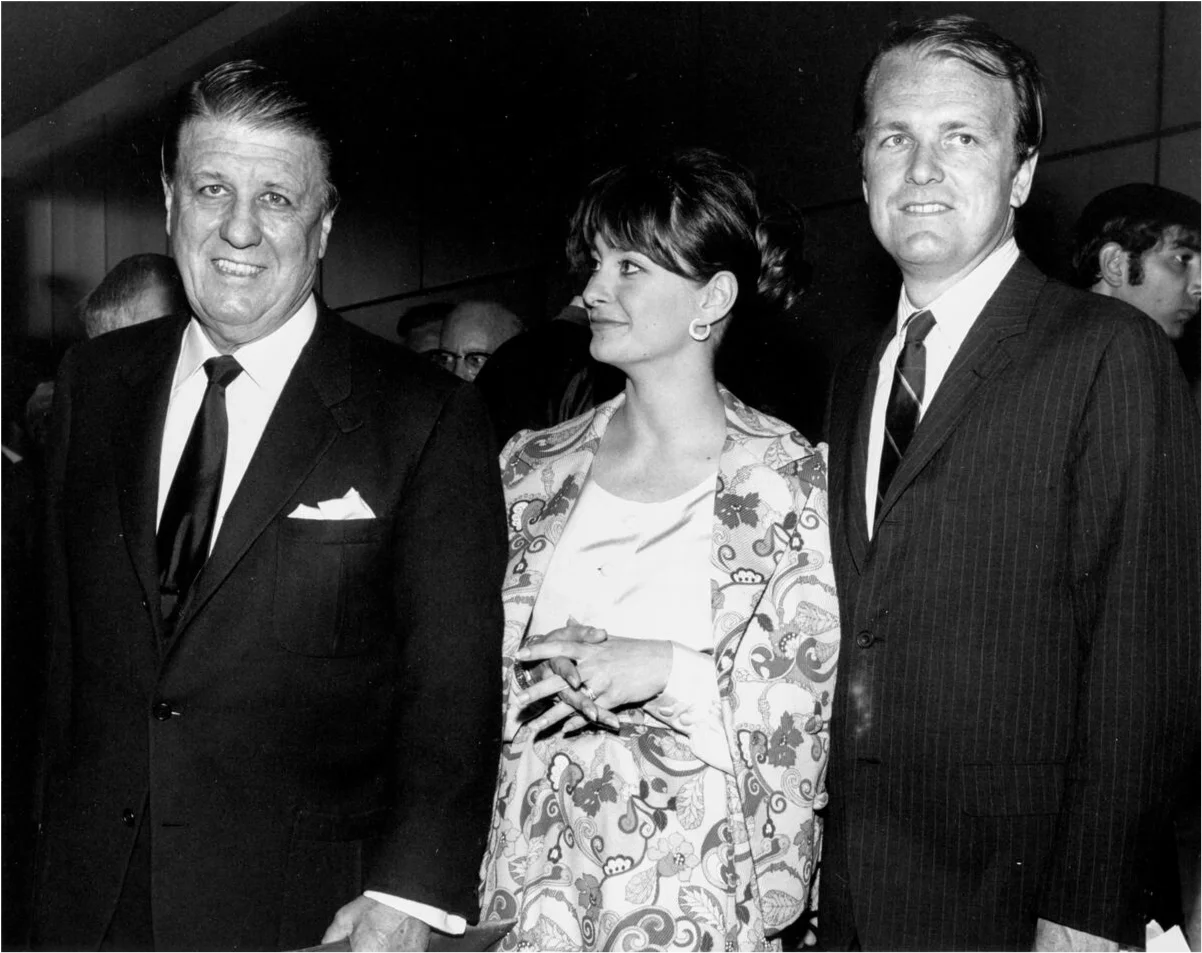
The name is George Stevens, Jr. – son of the film’s director – and the future Founding Director of the American Film Institute, where he was responsible for shaping its mission to preserve the heritage of the motion picture, to honor the artists and their work and to educate the next generation of storytellers. Pairing Stevens, Jr.’s own firsthand perspective on the making of the film – as described in his autobiography, “My Place in the Sun” (2022) and in a recent interview with AFI, we celebrate a film integral to the American canon, as well as a man whose impact on the art form continues to this day.
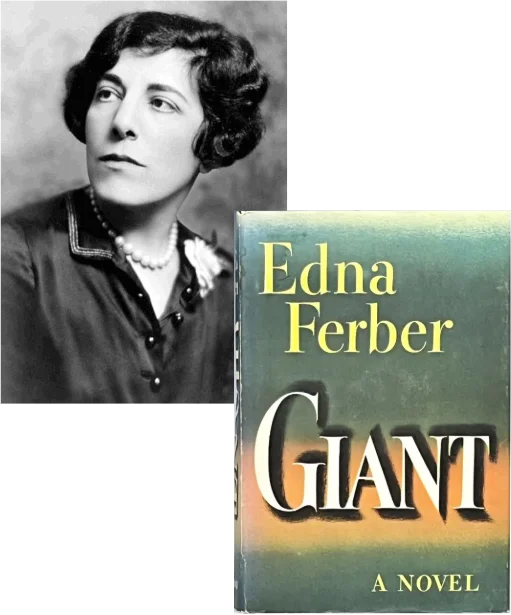
Despite its widespread acclaim upon release and its cultural impact in the decades that followed, GIANT was a challenging project to get off the ground. Pulitzer Prize-winning author Edna Ferber was protective of her bestseller “Giant” (1952) and with film adaptations of her previous novels – including three versions of SHOW BOAT (1929, 1936, and 1951) and the first adaptation of CIMARRON (1931) – having proven so successful, she knew the value of her work. “Giant” had already sold more than 50 million copies by the time it was being shopped around Hollywood. Despite this acclaim, studio after studio passed on the project for fear of a massive prospective budget and controversial subject matter.
“[Ferber’s] previous books had become successful films but studios balked at her lofty asking price for ‘Giant,’” Stevens, Jr. said in his book. “So Dad and one of his former antagonists at Paramount, Henry Ginsberg, crafted a partnership with Ferber, and negotiated a production deal with Jack Warner. My father was willing to work without salary, as were his partners, in exchange for 50 percent of the film and a ‘final cut’ guarantee for him.”
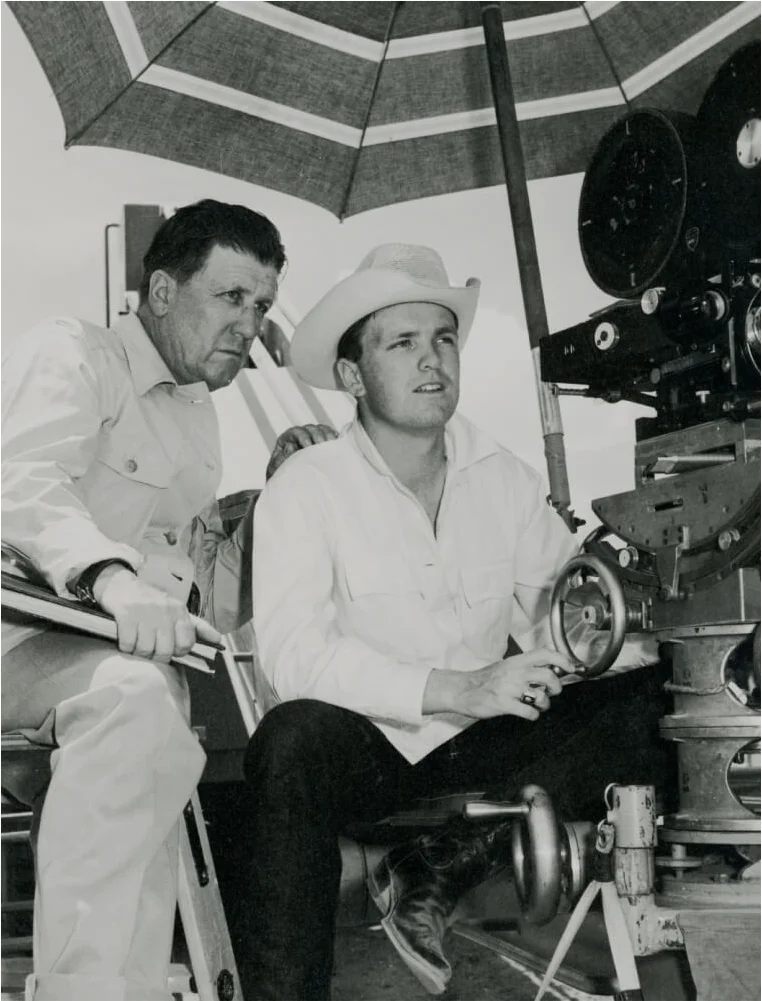
In his recent interview with AFI, Stevens, Jr. said he was a young Air Force lieutenant awaiting active duty at the time. Since the end of the Korean War in 1953 coincided with his college graduation, he was between assignments when his father – himself a veteran of WWII – brought him into the development process.
“Dad invited me to join him as he worked on the screenplay,” he said in his book. “For the next 10 months, I showed up at 9:30 each morning at my father’s apartment…Fred Guiol and Ivan Moffat joined my father and me in his living room…It was a masterclass in screenwriting, observing three experienced storytellers examine a 450-page novel, explore character and plot, pare away nonessentials, devise new scenes and end up with a sturdy cinematic structure for the complex story of three generations.”
In his interview, Stevens, Jr. explained how being in the writers’ room made a lasting impression on him – and, in fact, later informed the creation and early days of AFI when he was asked to contribute his knowledge of filmmaking to a national arts organization in service of the art form. “What one picks up along the way has been very useful to me…how you tell a story and how you lead people,” he said. “I felt what was needed was a bridge from the study of film, which was already in [several] universities, into the profession…And having learned [from] working with my father” – on several films (e.g., A PLACE IN THE SUN, SHANE, GIANT, and THE DIARY OF ANNE FRANK) – “I had an idea of what you need to know to make films. The idea was to translate that into an institution.”
Seventeen years after the release of GIANT – and six years after his son had established the American Film Institute – Stevens, Sr. spoke with Fellows of the AFI Conservatory (then called the Center for Advanced Film Studies) about the film and its development.
“When we [George Stevens, Fred Guiol and Ivan Moffat] finished the script, it was 370 pages…so, Freddie and I sat down and worked on cutting the script,” he recalled, according to a recording of the seminar preserved in the AFI Archive. “I think we got the script down to 240 pages.”
In his interview, Stevens, Jr. recalled the ingenuity involved in the scriptwriting process. “[Warner Bros.] sent a secretary, an elderly woman…to type the script, and we kept having to move the margins out so it would be fewer pages. And I think we got it down to 250 pages or 240 pages. And Dad sent it over to Jack Warner.” Then Stevens, Sr. met with Warner to go over the script. Stevens, Jr. recalls his father telling him that Warner said, “Oh hell, George. You know how to make the picture. I’m not going to go through all of this.”
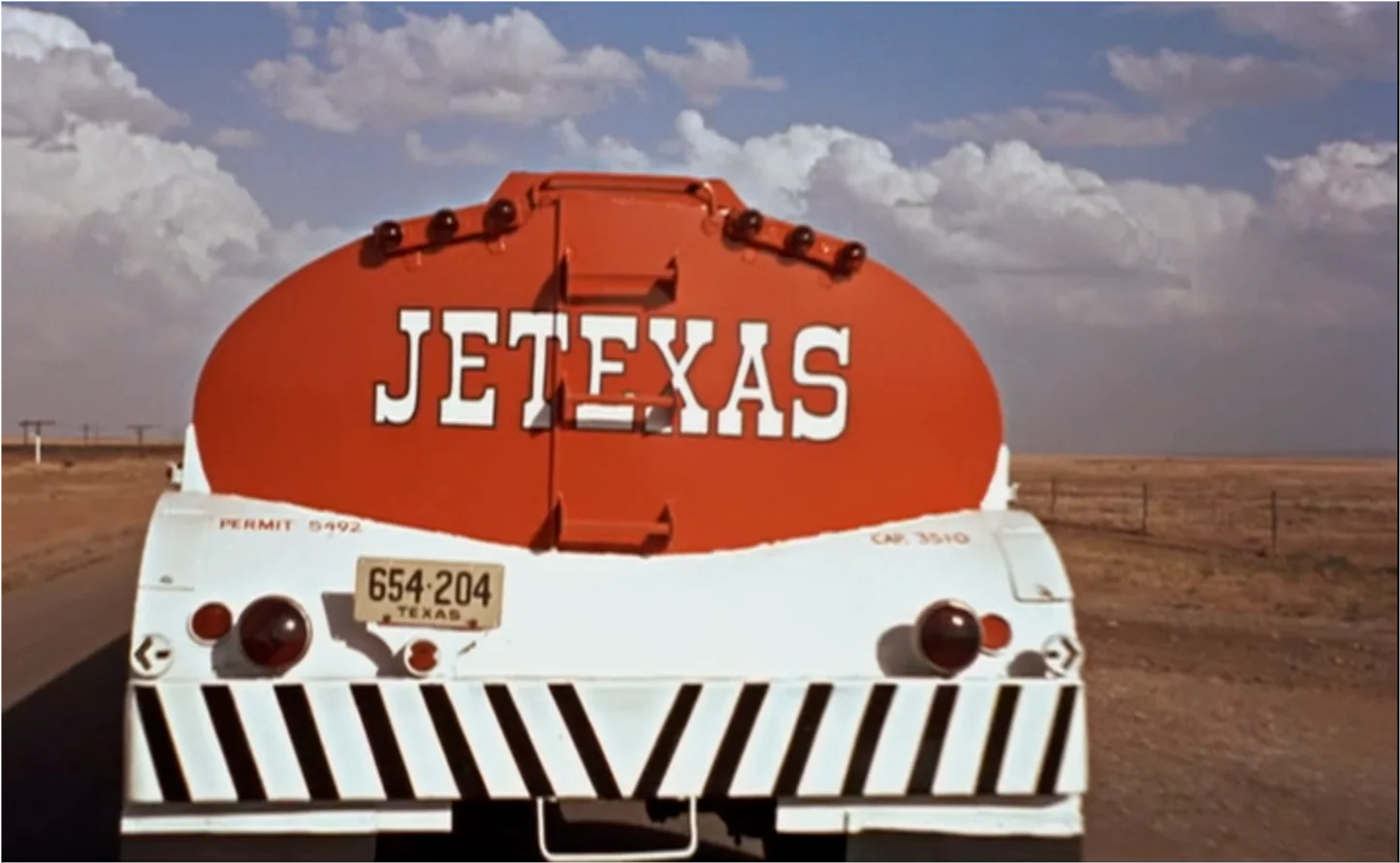
Of his own contribution to the process, he said that the writers found themselves trying to come up with a name for the oil trucks that were so integral to the story of Texas oil tycoons. “I suggested Jetexas,” he said. “And so, my…visual remnant on the screen is the Jetexas oil truck…that Jetexas oil truck that still goes down the road.”
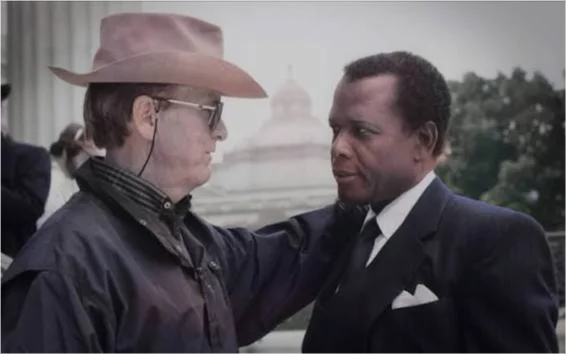
By the time a first draft of the script was complete, Stevens, Jr. was called to duty. Over the next two years, he directed Air Force training films in the South, where he witnessed firsthand the institutionalized racism endured by Black Americans and other people of color on the cusp of the Civil Rights Movement. These themes would become central to GIANT, and would inform the rest of Stevens, Jr.’s career, both in filmmaking and at AFI. He said in his interview: “I brought with me social justice from my father. And of course, in my own work, I made SEPARATE BUT EQUAL with Sidney Poitier, the story of Brown vs. Board of Education, and wrote a play called ‘Thurgood.’ So much of my work…had to do with social justice. So, yes, it runs in the family.”
In May 1955, Stevens, Jr. took leave from his service and joined his father on set in Virginia and in Marfa, Texas. Marfa’s population at the time was just 3,600 and the town was racially segregated, but Stevens, Sr. refused to allow discrimination on set.
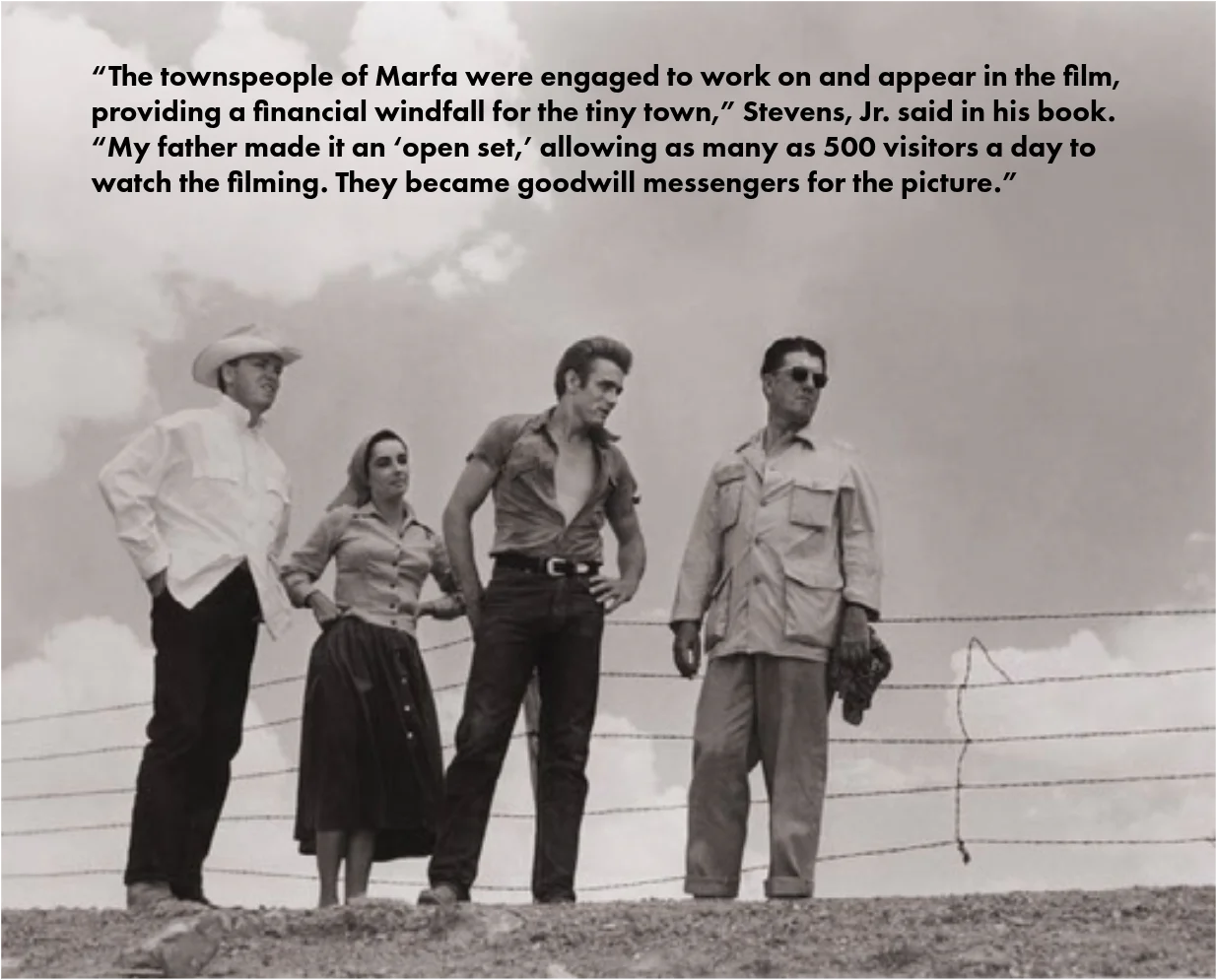
Aside from casting Marfa locals – many of whom were of Mexican heritage – as background actors, Stevens, Sr. cast Mexican actress Elsa Cardenas in her American film debut as the daughter-in-law of the film’s patriarch, played by Rock Hudson. GIANT also included the work of Black character actor Napoleon Whiting as Swazey, a butler whose point of view is represented by the camera to evoke the perils of racial inequality.
“Race and feminism – themes rarely addressed in Hollywood films of the era – were at the heart of GIANT,” said Stevens, Jr. in his book. “Elizabeth Taylor, as Leslie, is a maternal figure who challenges assumed masculine superiority and brings about change, including in her husband, who moves beyond his prejudices when he steps up to fight the beefy owner of a roadside diner who insults his Hispanic grandson.”
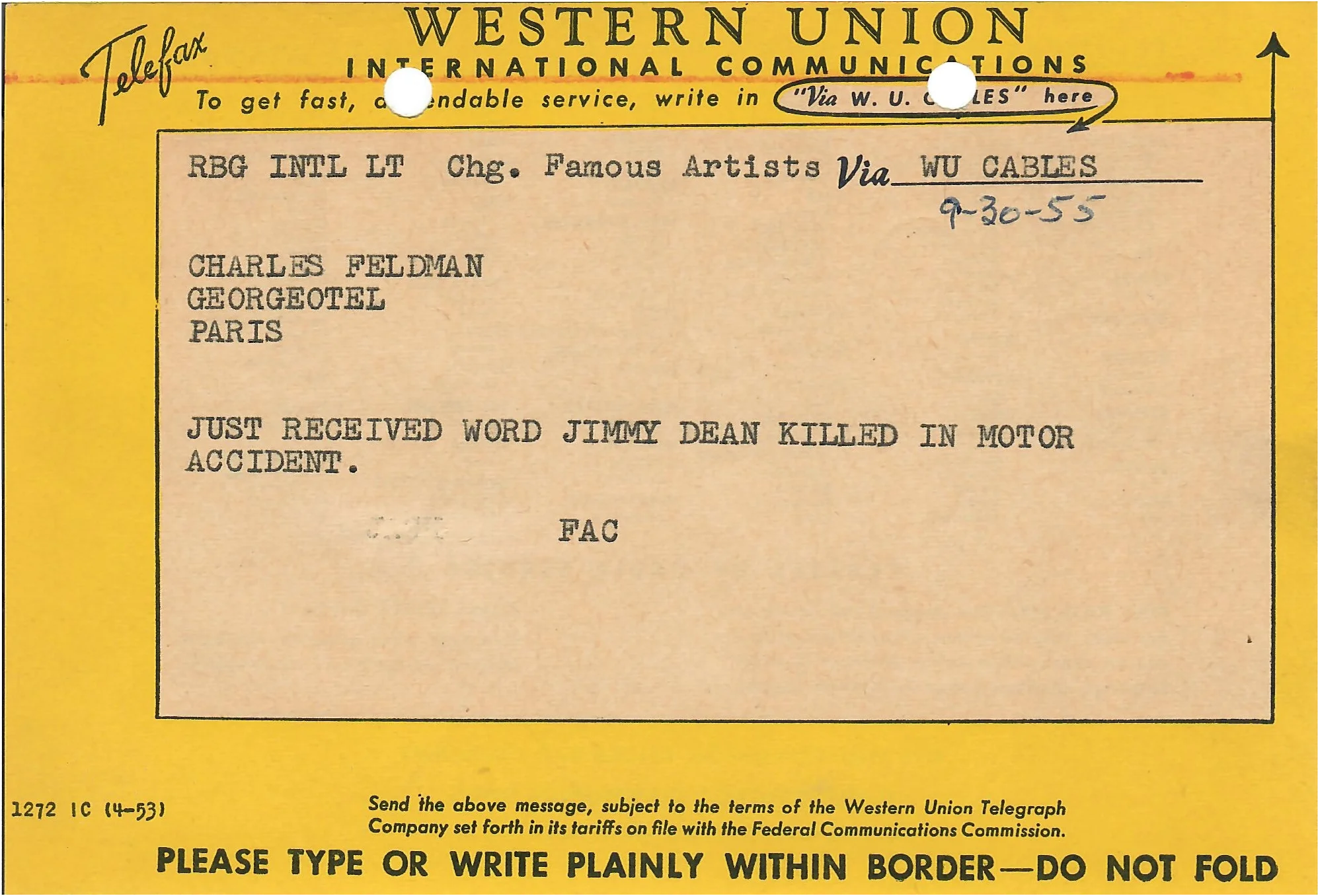
Infamous as James Dean’s final picture before his death – but celebrated for his performance – GIANT wasn’t originally envisioned with a role appropriate for the young star. “Dad had talked to Richard Burton [and] Robert Mitchum, and it was written as a bigger man in the novel, but [James Dean] had been working at the studio on…EAST OF EDEN and he used to come around Dad’s office. He knew he was working on GIANT…and Jimmy really made the case. He said, ‘I think that guy’s me. I can do it…’ [Dean] was interested in race cars and him and my father had a talk.” At this talk, Stevens, Jr. recalled, “Dad said that, ‘I have to ask you not to drive your race car while we’re making the picture…if you get hurt, 300 people have to stop work.’ And Jimmy understood it, and he was faithful to it. [But] he finished shooting earlier than the others, and he bought this Porsche Spyder.” Stevens, Jr. also recalled how his father had another discussion with Dean about racing, this time at a road race in Salinas, California: “‘You’re going to have your car driven up, right?’ …But then apparently on the morning of departure…he said, ‘I want to feel it on the road.’ So he decided to drive it up, and it was fate that was how his life ended.”
Following the tragedy and with the film still not finished, co-star Nick Adams was brought in to record additional dialogue for Dean’s character – just one piece of an enormous puzzle still to be completed. “My father worked with three film editors to shape [750,000] feet of film into a finished motion picture,” Stevens, Jr. said in his book. “I joined him in July when I got out of the service. No feature film had run longer than three hours since GONE WITH THE WIND in 1939 and the first time I saw GIANT it ran nearly four hours. The challenge was to sharpen the story by trimming the film to its proper length.”
For a film made on such a massive scale, even the setting of post-production was appropriately epic. “[Dad] worked not on a Moviola, but he had a theater built where the screening room was at Warner Bros., and that’s where we did the editing,” said Stevens, Jr. in his interview. He also described his father’s editing room setup: “[next to] his chair in the editing room [he had] control of the right-hand projector [and the] left-hand projector.” Using that setup Stevens, Sr. was able to find the right piece of film – like the extraordinarily moving shot of Elizabeth Taylor standing in the dark living room. “Whereas, in a Moviola, he didn’t feel he’d be seeing it. In any event, this had been going on for so long, and I said, ‘Dad, we previewed this picture twice, and it really plays with an audience…Don’t you think you should just lock it up and get it out there to the people?’ And he said, ‘Well…if you want to think about the [hours] that are going to be spent watching this film…don’t you think it’s worth a little more of our time to make it better?’ And I thought that was a beautiful idea, and it was so true of his approach to his work.”
At his 1973 seminar, Stevens, Sr. articulated his confidence that the narrative would resonate with audiences despite its epic length, and why. “The structural development of the picture, I believe, is what saves it,” he said. “Because it has an excellent structural design throughout having to do with the considerations for the overlapping interest of the audience looking some distance ahead, creating an anticipation, going a different direction and so on down to the finish, which furnished a reverse on how that type of a story would normally finish.”
He was right. The picture opened in theaters nationwide to critical praise and a “giant” response from audiences, despite its three-hour-plus runtime and its unflinching critique of racism and sexism in America. GIANT became Warner Bros.’ highest-grossing film – earning $39 million with a budget of $5.4 million – and held its record for more than 20 years, until SUPERMAN (1978) made audiences believe a man could fly.
In addition to its embrace by audiences, GIANT also proved a powerful message for the time. As documented in the AFI Catalog, The Hollywood Reporter referred to the film’s portrayal of race and said that it “has the drumbeat of contemporary history,” and Daily Variety’s review said that GIANT demonstrated how racism against Mexicans in the Southwest was “as bad, and as wrong, as the Negro’s situation in the Deep South and elsewhere.” As enduring as it was celebrated upon release, GIANT was selected by the Library of Congress in 2005 for inclusion in the National Film Registry for its “cultural, historical and aesthetic contributions” to the art form.
Reflecting on the film’s legacy, Stevens, Jr. said “[GIANT] feels so contemporary, that it’s dealing with the things that we care about today.” He continued, “My father had a very strong sense…for the underdog or just simply social justice.” In his interview, Stevens, Jr. shared a quote from Neil Sinyard’s biography of George Stevens, Sr. (‘George Stevens: The Films of a Hollywood Giant’): “I love what [Sinyard] wrote in the last line of his chapter on GIANT. He says, ‘What is gigantic in the film is not the scale of its setting and action, but the breadth of its humanity.’ And I think that’s what makes it of such value and why films can be so important, particularly if they stand the test of time.”
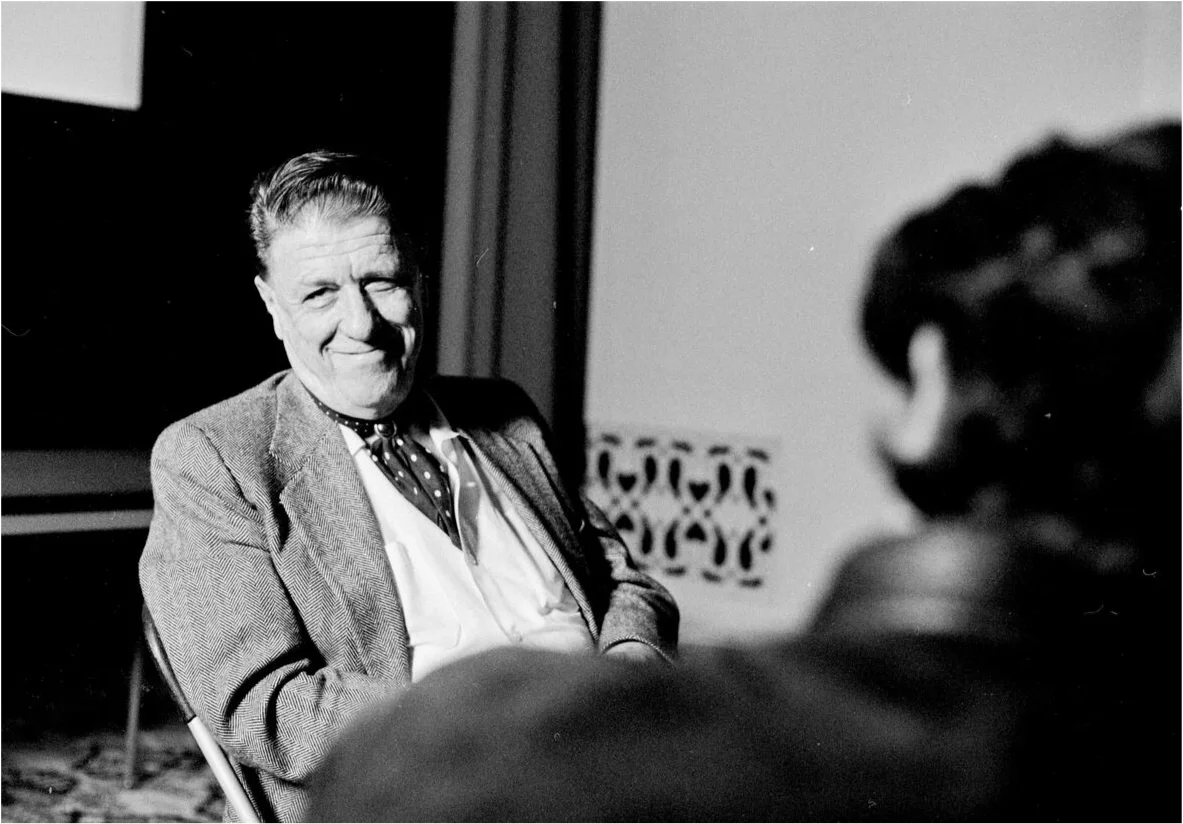

The AFI Archive is an ongoing program which adds countless new items each year, including exclusive conversations with acclaimed filmmakers and performers captured at AFI, and is at the forefront of state-of-the-art digitization efforts ensuring the stories of today are protected for future generations.
Support the AFI Archive and AFI Catalog to protect the history of film.